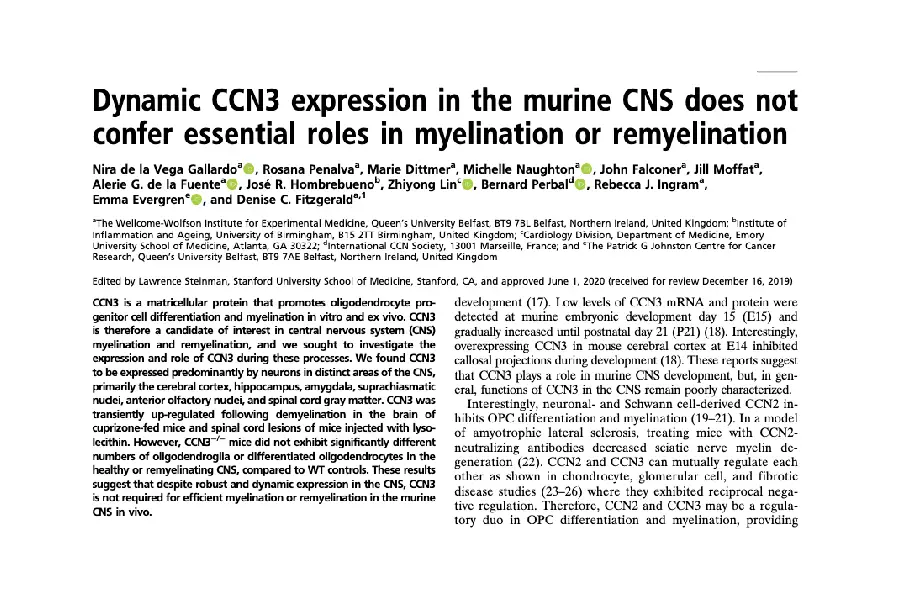
This study investigates the role of CCN3 in the central nervous system (CNS) during myelination and remyelination. The findings reveal that despite its dynamic expression, CCN3 is dispensable for both processes, suggesting redundancy in the molecular pathways governing myelin repair.
The absence of CCN3 does not result in significant deficits in oligodendrocyte function or myelin integrity, indicating other compensatory mechanisms ensure effective myelination and remyelination.
These results refine the understanding of molecular regulation in CNS repair and point to alternative therapeutic targets for enhancing myelin restoration in conditions like multiple sclerosis.